
JUNE 2025 and 2026: June has several large and colourful moths, a real help for a complete amateur.
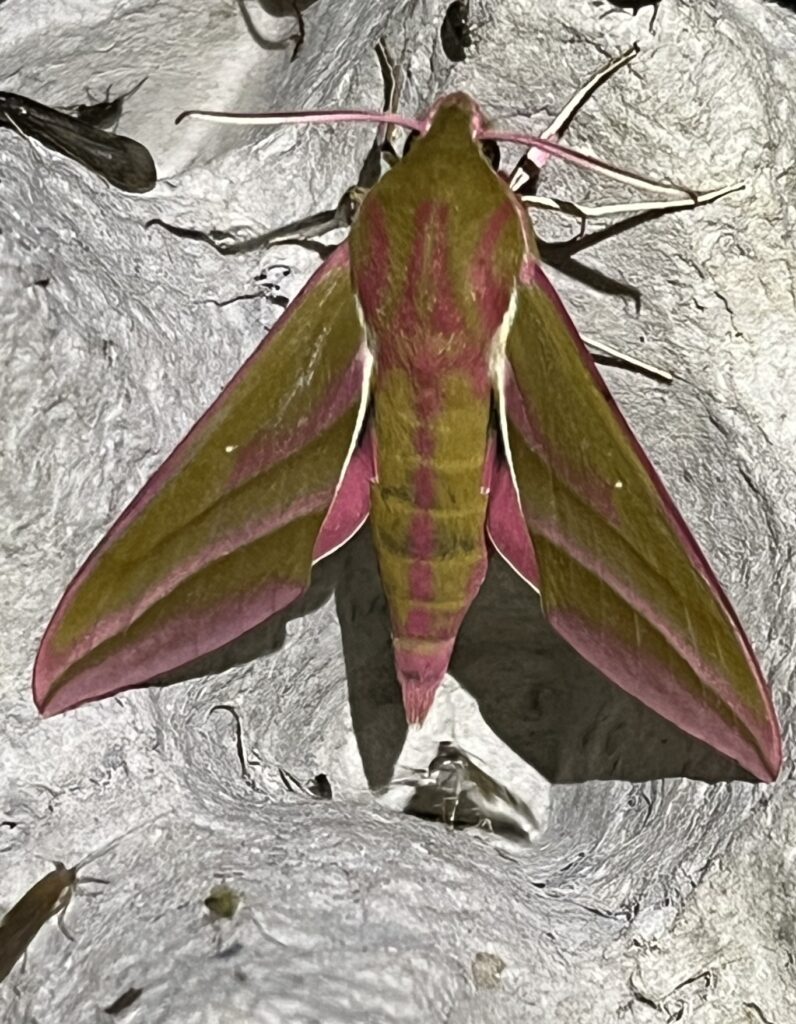
Elephant Hawk. These moths are a great start, settled in the egg box inside the trap.
Elephant hawk moth,
JULY 2025: 26 species seen 84 moths.
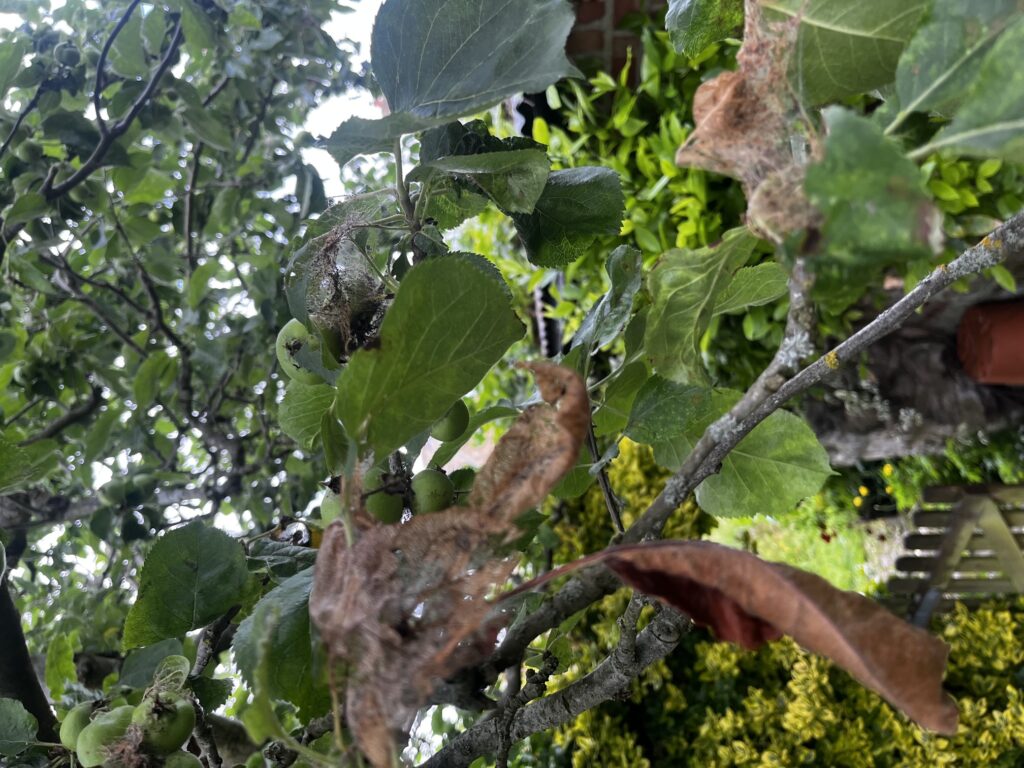
Apple ermine (micro moth). There are three ermine moths that look the same. Luckily the apple ermine are on apple trees. The caterpillars are on apple trees from may to July followed by the moths from July to September . They have been steadily moving up the country and if you have an apple tree you will have seen the brown dry leaves with caterpillars of the apple ermine. They dont do any long term damage to the trees so no need to do anything.
Apple ermine dry leaves on tree,,,,, not a moth to show
AUGUST 2025: 48 species seen 65 Moths. (Peter Cuss came again)
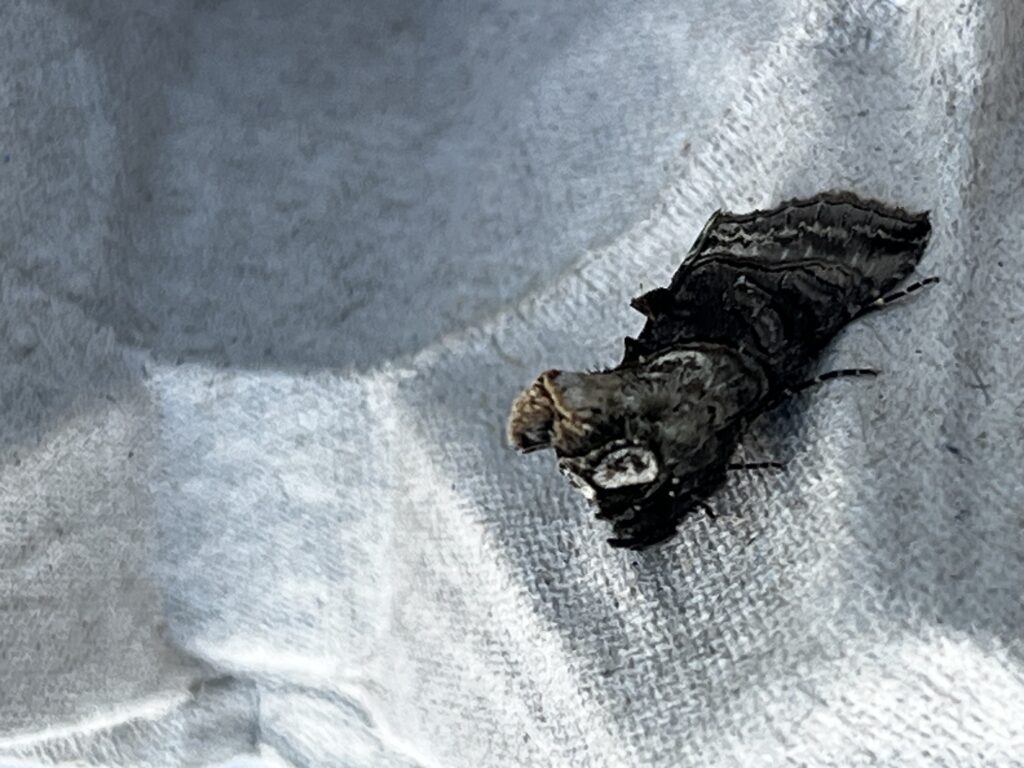
Spectacle. Flies May to September see the head on picture and the naming is clear.
SEPTEMBER 2025: 18 species seen 90 moths
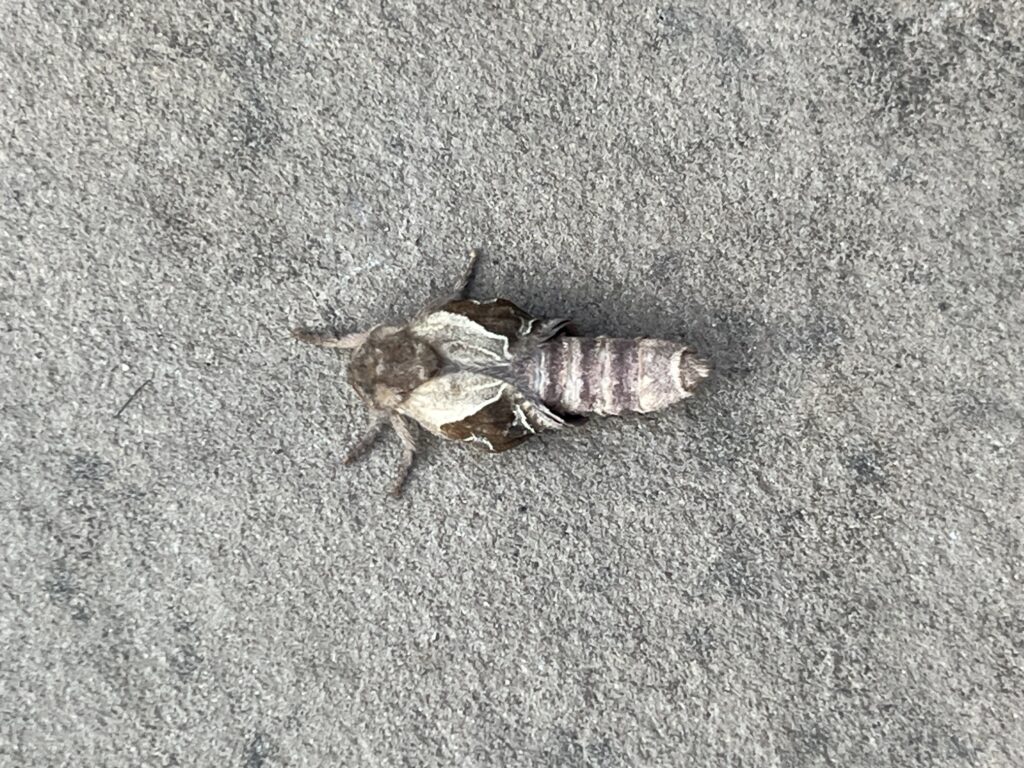
Orange Swift. Seen by a grandson just after it pupated and then pumped up the wings settling and transferred to a tree. All in about 15 minutes
OCTOBER 2025: 26 species seen 42 moths.
Rusty-dot pearl. A migrant moth from the continent.
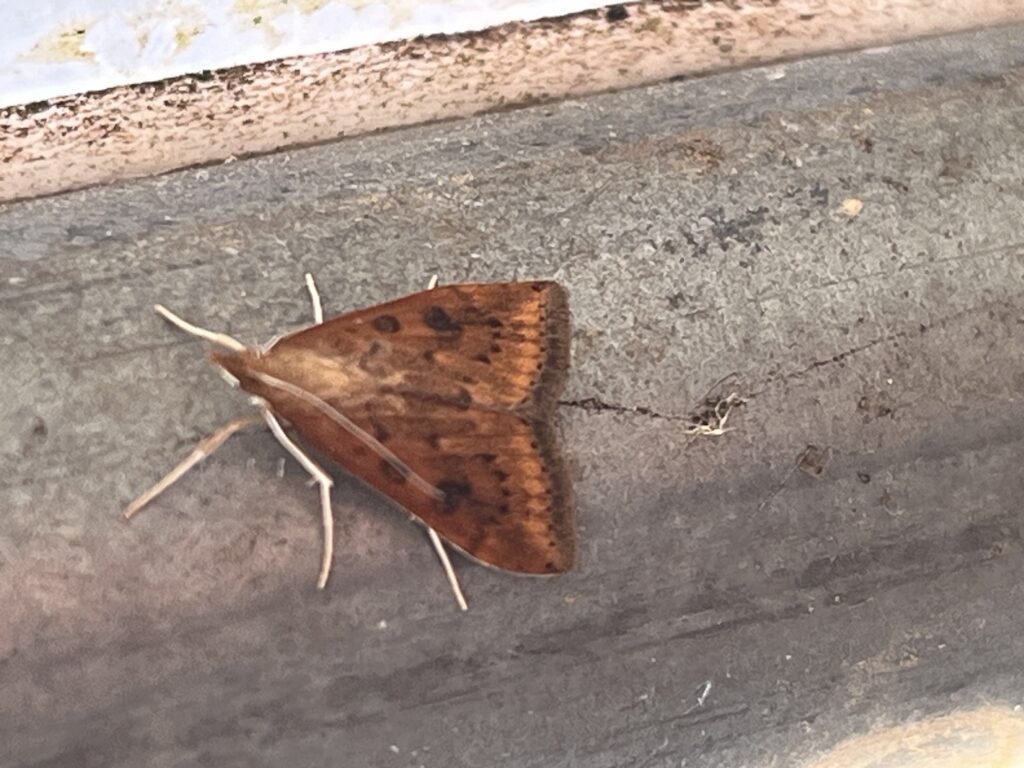
NOVEMBER 2025: 4 species seen 5 moths, what a wet month.
Winter moth. This slightly out of focus photo is a male winter moth (the female hatches on a tree and isn’t able to fly) the male follows a pheromone trail to the female and eggs are then laid on the tree. They have compounds that act as antifreeze. This is a very important moth for blue tits, the caterpillars hatch in the spring about the same time as the first blue tit brood. The brood eat about 10,000 winter moth caterpillars before they fledge.
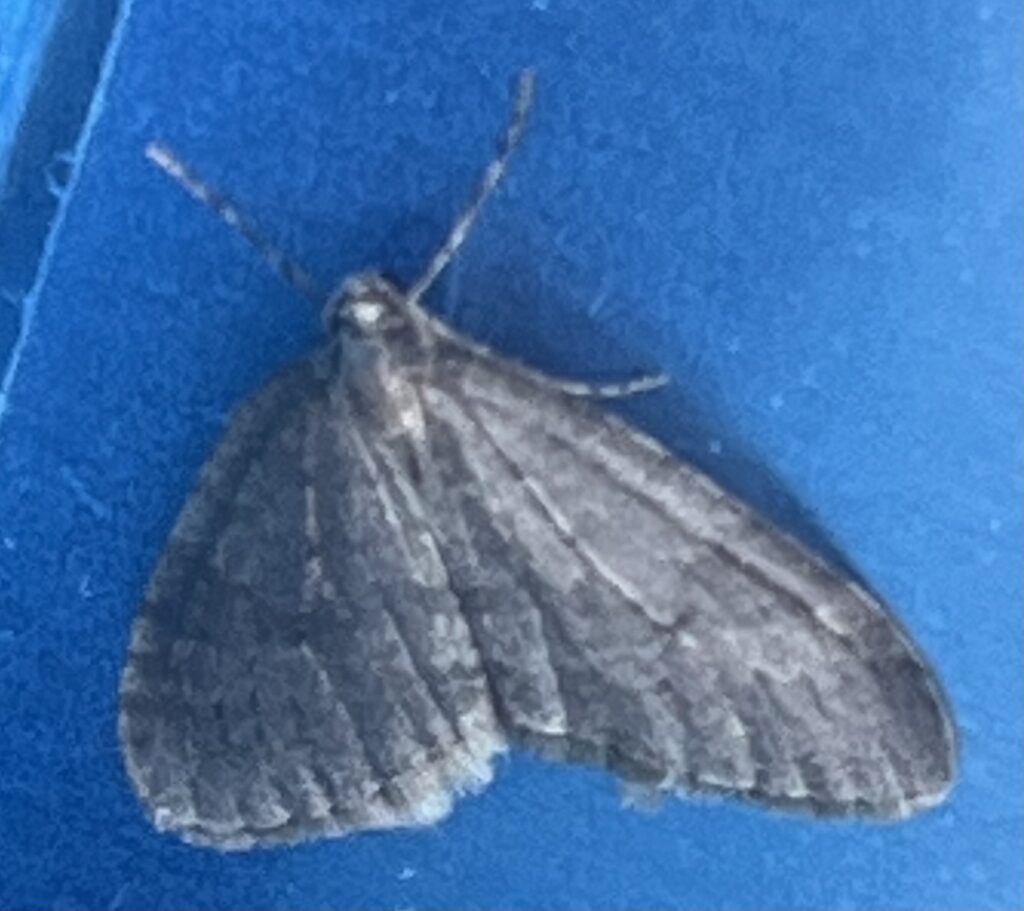
DECEMBER 2025: 1 species seen 1 moth
December moth. A woodland butterfly and looks snug for the winter
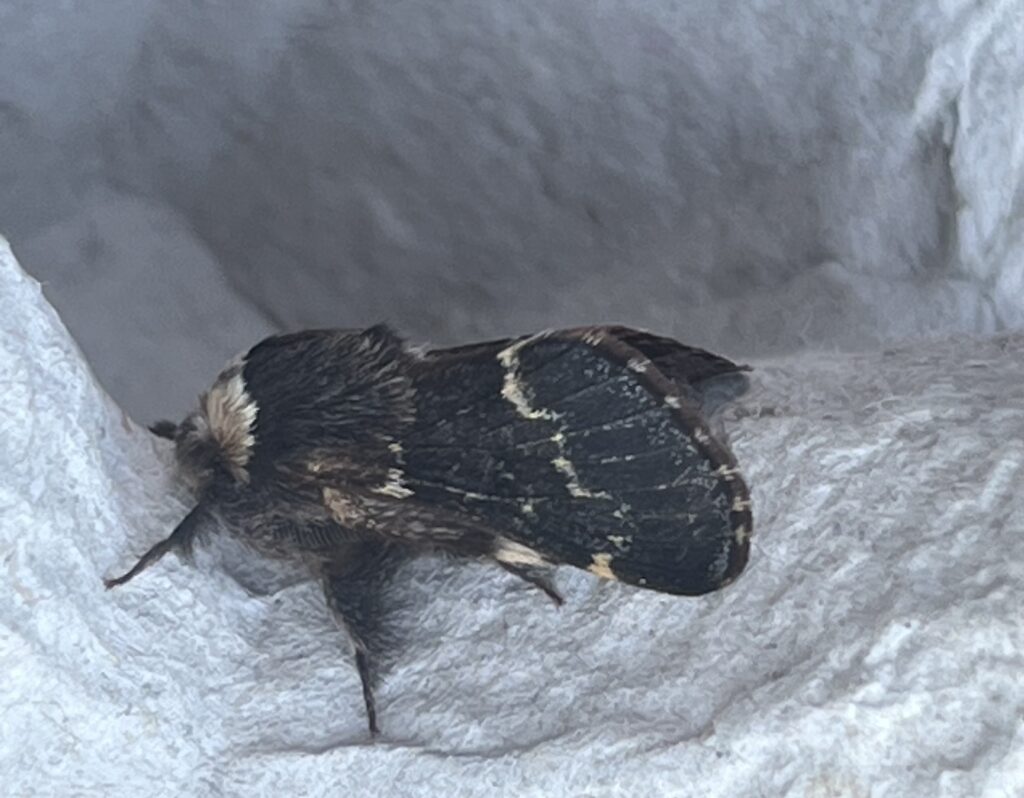
JANUARY 2026: Really wet again and NO moths seen.
Pale pinion. Actually seen on the 9th March 2026 . The moth was on a battery cable and not in the trap. Really looks like a bit of wood.
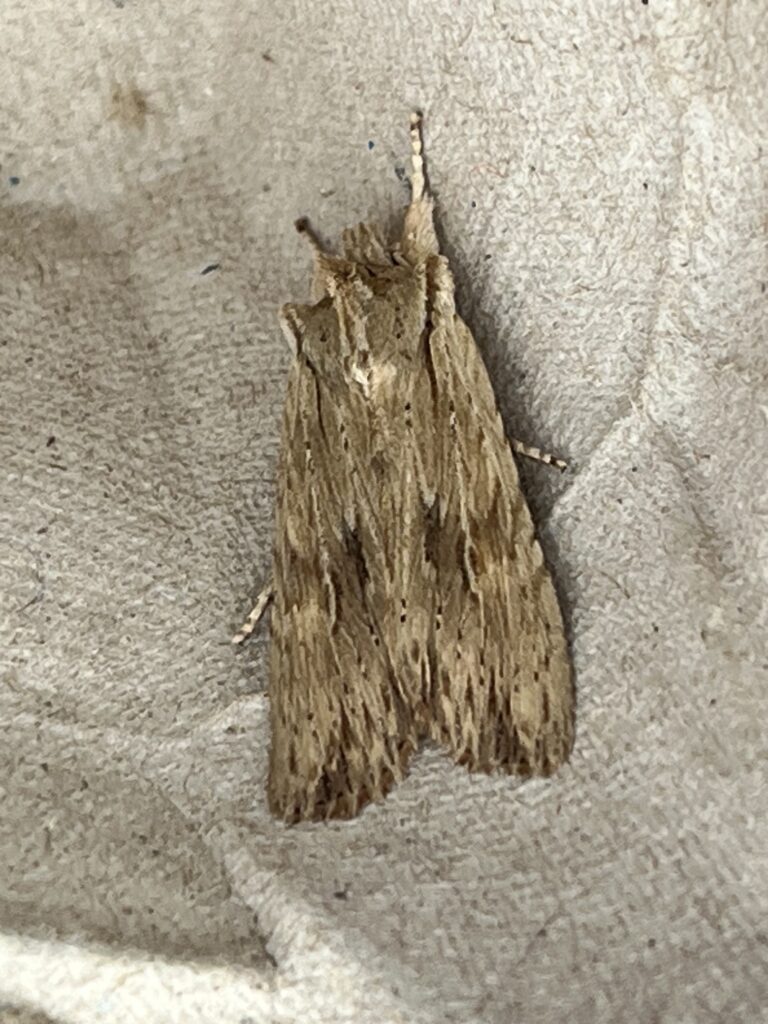
FEBRUARY 2026 Still wet 3 species and 4 moths.
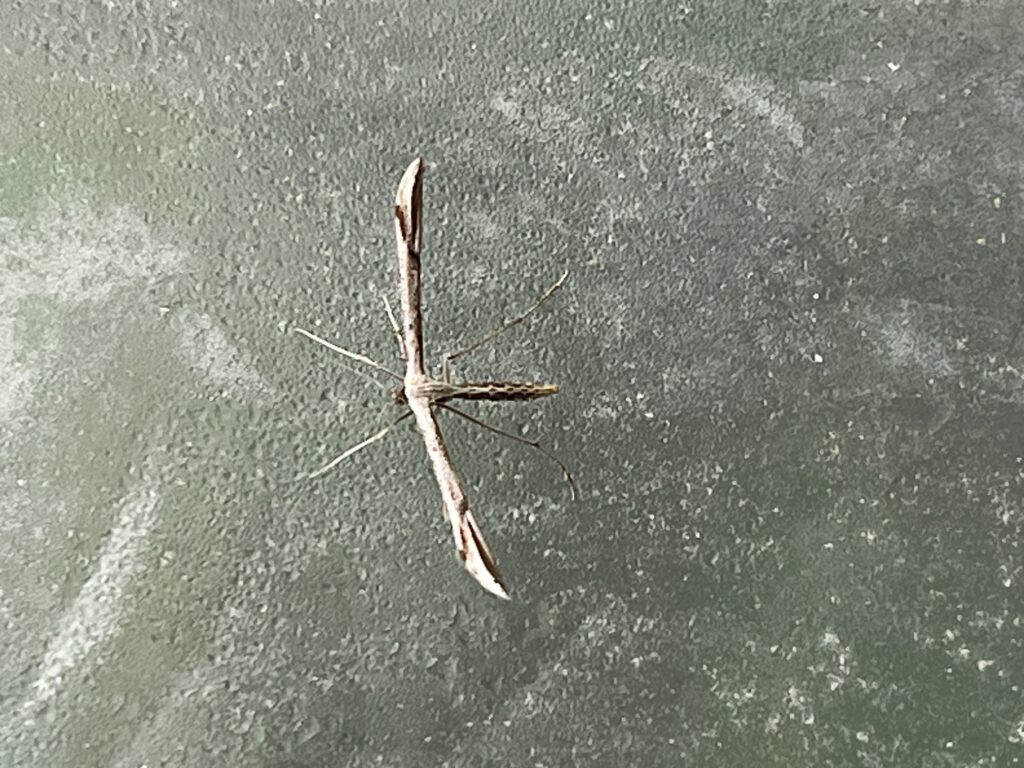
Common Plume A micro moth and can be seen in the day, lives in grasses (as long as the grass isn’t cut)
MARCH 2026: 18 species and 121 moths.
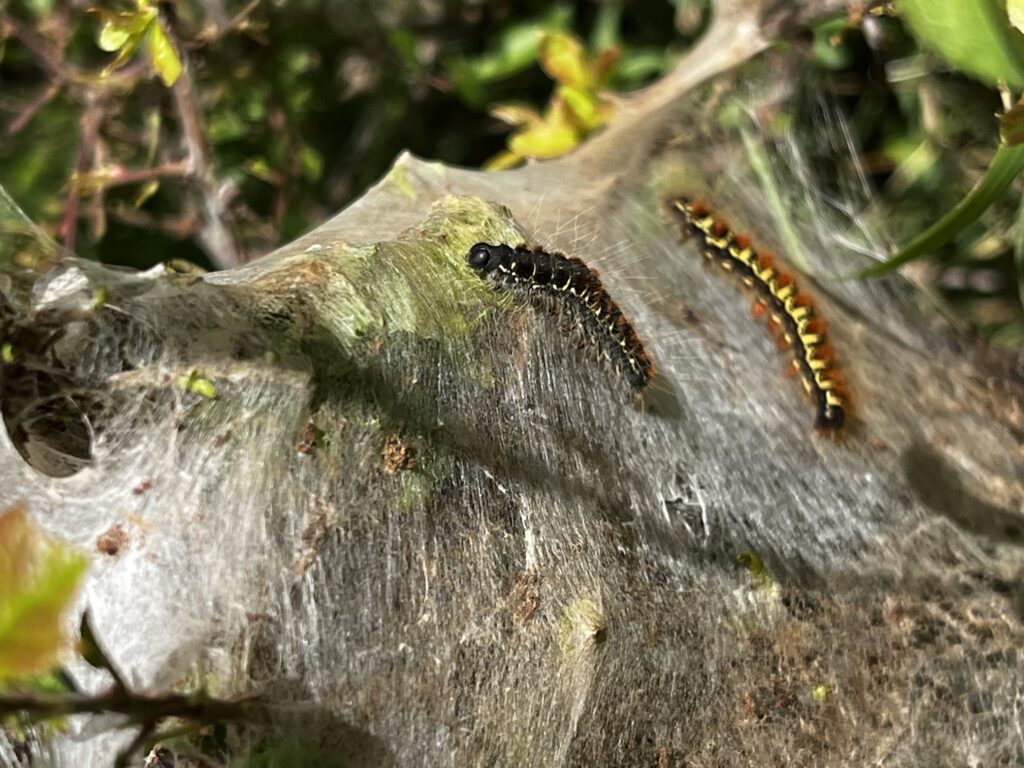
Small Eggar The moth flies in March and April and these caterpillars were found in June. This is a rare moth, there are concerns about the species with possible parasites in the caterpillars reducing the moth numbers.
APRIL 2026: 21 species and 59 moths.
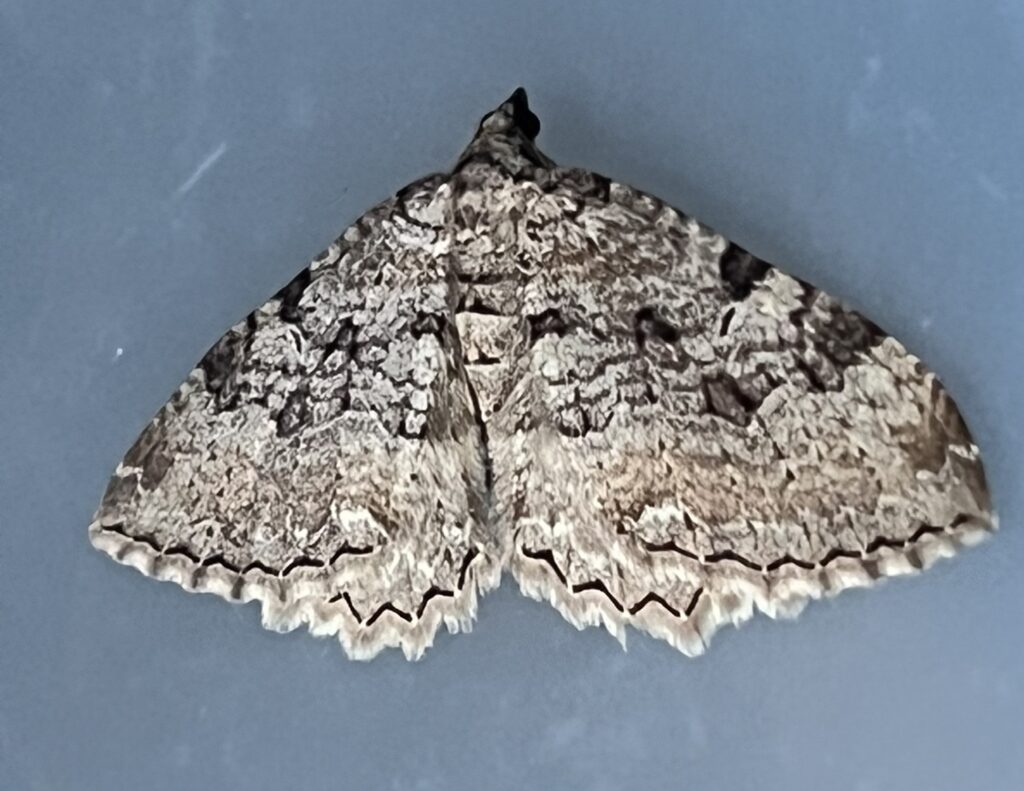
Scarce Tissue Another less common moth and is known to lay eggs on Mahonia, it is a retained species so has to be confirmed with a photo.
MAY 2026: 43 species and 120 moths.
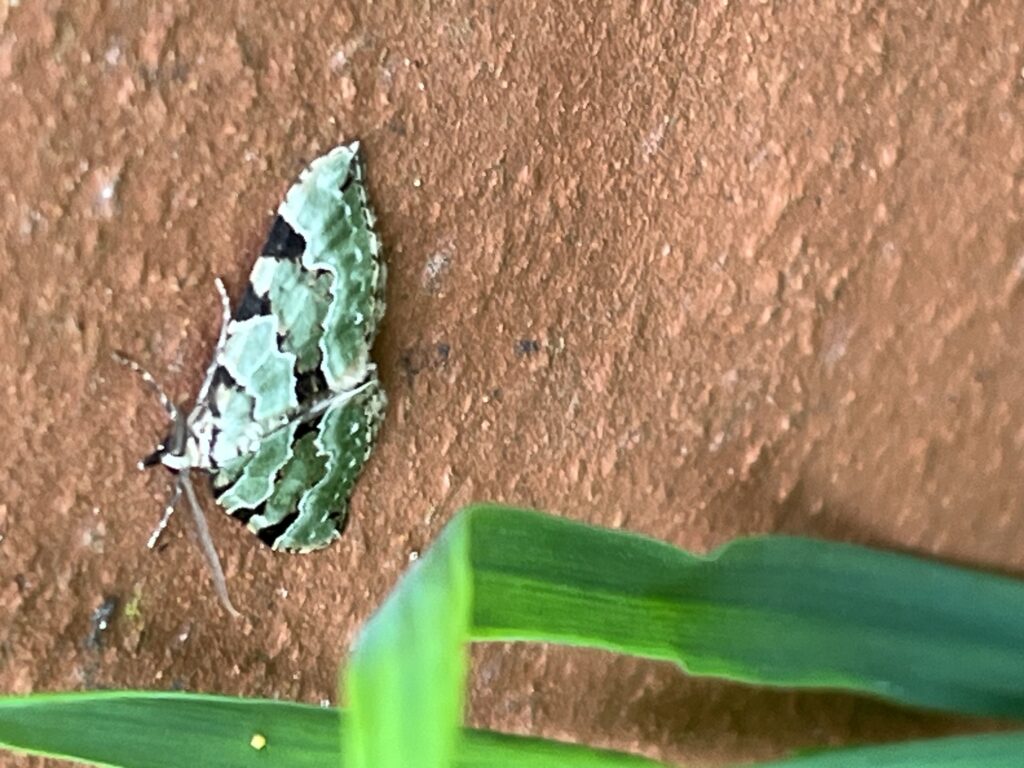
Green carpet This one seen during the day on a flower pot.
Micro moths are small, agile with about 1,600 species in the uk very tricky to identify.
Spot the micro. it has just flown into the middle of the photo, look closely at differences in grass stems.
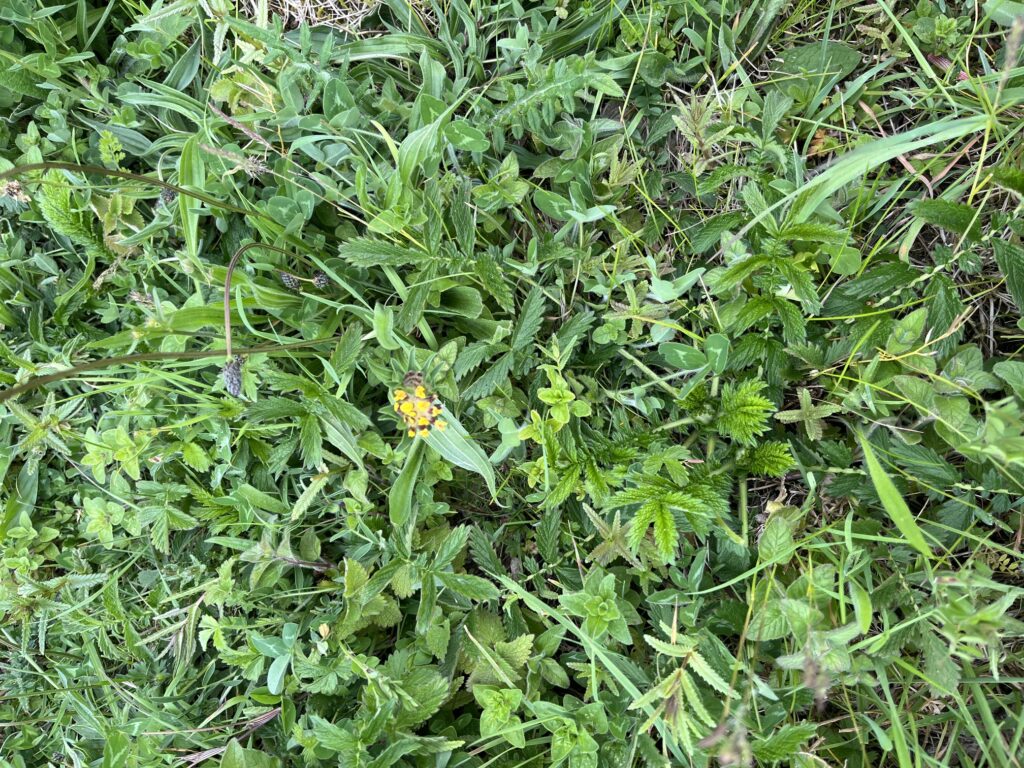
This one is easy to spot, a twin barred knot horn.
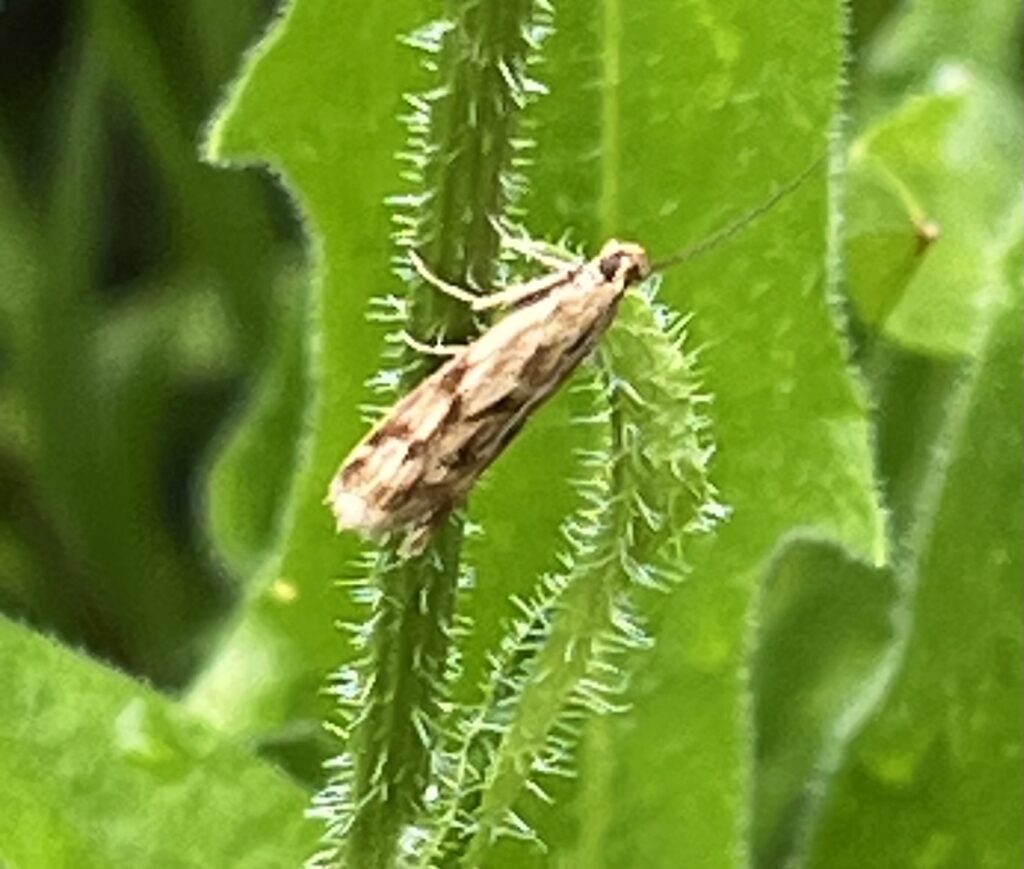
Many thanks to all the gardens visited and to the Upper Thames Moth Group particularly Peter and Marc. The records will be used to inform the mosaic of habitats across the Meadow and surrounds.